How hail insurance supplements work
Your first estimate is almost always too low — not because anyone cheated you, but because adjusters inspect fast and miss 20 to 40% of the dents. The supplement is how the rest gets documented and paid. It is repair-shop paperwork, not claim handling. You file your claim; we document the damage under the line boards and submit it in the carrier's own format.
23 years and 5,000+ vehicles · documented by hand at our Olathe shop · lifetime warranty in writing.
A supplement is an updated repair estimate submitted to your insurer after the shop inspects your vehicle properly. It is the most important document in your hail claim, and it is the one most first-timers have never heard of. The carrier's first number reflects a quick look. The supplement reflects every dent counted under correct lighting. The gap between them is the supplement, and on hail claims that gap is normal.
Why is the first estimate almost always too low?
Adjusters inspect vehicles in conditions that hide dents. Sometimes it is a catastrophe site — a parking lot running dozens of claims at once — in bright sunlight that washes shallow dents out of view. Sometimes the estimate is written from photos on a phone, with no in-person look at all. Under any of those conditions, 20 to 40% of the dents go uncounted. The first estimate captures the obvious damage and not much else.
This is how the industry is built, not a scheme against you. Carriers prioritize speed on the initial inspection and assume a supplement will catch the rest. The system expects it. Knowing that ahead of time keeps you from accepting a first estimate as the final word — because it rarely is.
20 to 40% of the dents go uncounted on the first pass. That gap is the supplement.
What does a proper shop inspection actually look like?
When your vehicle comes into our Olathe shop, we pull it under LED line boards. Those are banks of striped fluorescent tubes whose reflection rolls across the metal and reveals every deformation in the panel. A dent invisible in a parking lot becomes obvious under the line board. This is the single biggest reason a shop count differs from a sunlight estimate.
- Pull the vehicle under LED line boardsThe striped reflection rolls across the metal and reveals every deformation — a dent invisible in a parking lot becomes obvious here.
- Map the damage panel by panelWe work each panel individually, count the dents by size — dime, nickel, quarter, half-dollar — and classify them against the CCC ONE matrix, the same estimating system the carrier's adjuster uses.
- Separate the panels by laborHood, roof, and trunk get separated from doors, fenders, and quarter panels, because density and access change the labor on each one.
- Submit the documented count as the supplementPhotographs of each panel under the line boards, written in CCC ONE format line item by line item, so the adjuster is reading the exact software they already work in.
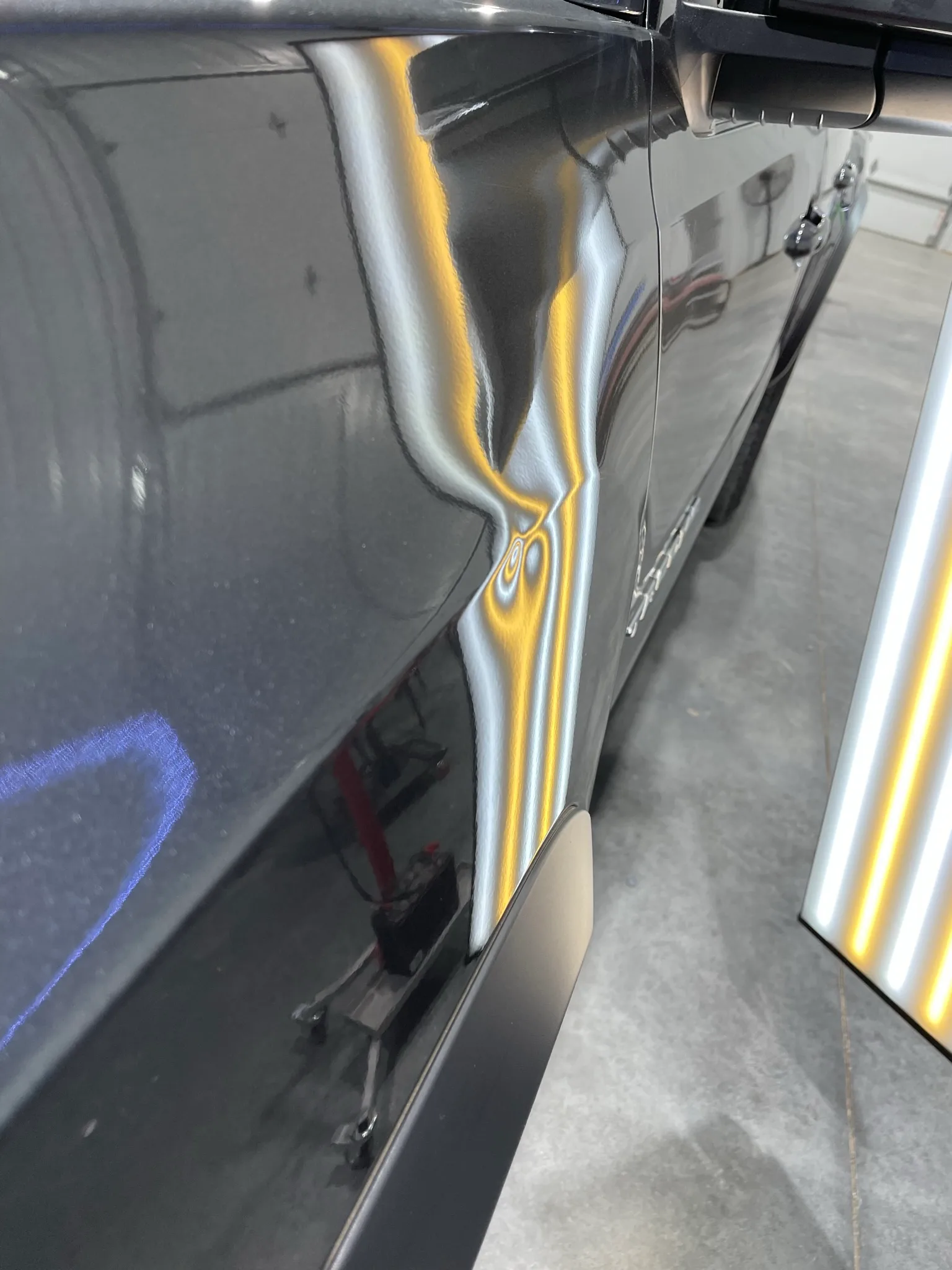
That documented count becomes the supplement. There is no translation step and no vague language — just the carrier's own format, filled in with what is actually on the car.
Is this you negotiating my claim for me?
No — and the difference matters in both Kansas and Missouri. A supplement is repair-shop documentation. We measure the damage, photograph it, and submit our estimate in CCC ONE format. We do not file your claim, manage it, or run it on your behalf — that would be public adjusting, which we are not licensed to do and do not do. You file your claim and it stays in your name.
What the shop does
- Measures and photographs the damage
- Writes the estimate in CCC ONE format
- Coordinates the repair with your adjuster
What stays yours
- You file the claim — it is in your name
- We never manage or negotiate it
- The claim number comes from you
What we do is coordinate the repair, and that part is squarely the shop's job. We talk to your adjuster about the documentation, answer their questions about specific line items, and provide the photos they ask for. The claim is yours from start to finish. The repair — and the paperwork that supports it — is ours. Your right to choose your shop covers why the adjuster cannot push you elsewhere.
How does the approval process work?
Approval usually takes one to two business days per round. The adjuster reviews our supplement against the carrier's guidelines, compares our photos and counts to the original estimate, and approves the additional line items the documentation supports. When the supplement is clean — every dent photographed under the line boards, every line tied to its CCC ONE code — that review moves quickly.
Most hail claims settle in a single supplement round. Severely damaged vehicles sometimes need a second, because dents hidden behind trim and moldings only surface once we remove those pieces during the repair. Each round adds a day or two. On a heavily hit car, two rounds are common and the carrier expects them — it is not a sign of a problem.
Occasionally an adjuster questions a specific line item, and we answer it with documentation. That means sending the photo of that panel under the line board and pointing to the matrix code that justifies the labor. It is rare, it is straightforward, and it is exactly why experienced shops keep their paperwork tight. The total-loss guide covers what happens when the documented number climbs toward the threshold.
What is my role in all of this?
Your one step is signing our work authorization. That is the form that authorizes us to talk to your insurer directly about the repair and the documentation. Once it is signed, we prepare the supplement, submit it, field the adjuster's questions, and follow up until it is approved. You get a text update at each milestone.
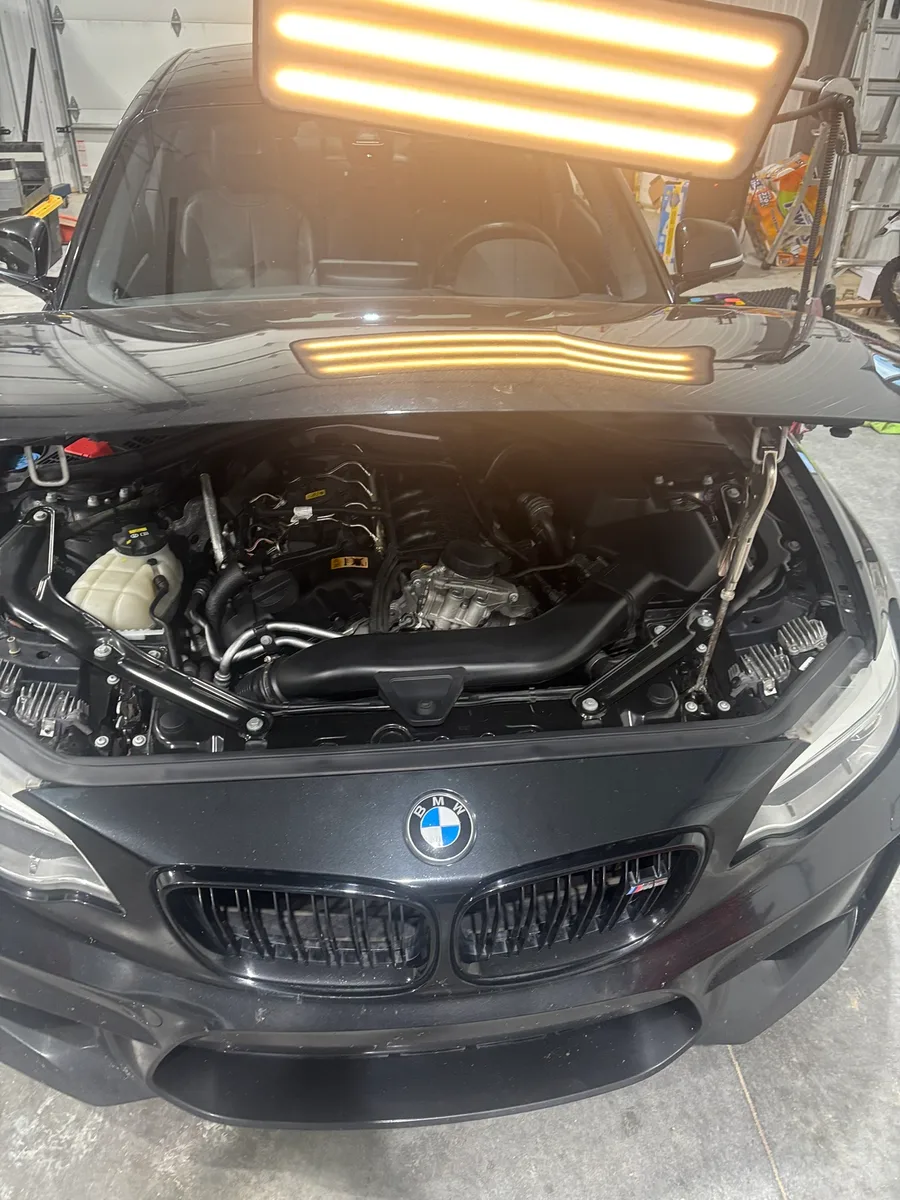
You do not need to understand CCC ONE, learn insurance vocabulary, or sit on any calls. Filing the claim is yours, and we walk you through that part with the free claim walkthrough and a word-for-word script for your carrier. Documenting the repair is ours. The two never blur together, and that boundary is what keeps everything above board in both states.
The whole reason this works is that a permanent shop knows the format cold. Over 23 years and 5,000+ vehicles at our Olathe location, the supplement process has been refined to keep rounds down and approvals fast — every dent on a body diagram, every line item in the carrier's own software. You hand us the keys and the claim number; we handle the documentation and the repair from there. Your deductible stays exactly the same through all of it.
Key takeaways
- The first estimate misses 20 to 40% of the dents because adjusters inspect fast, outdoors or from photos, without LED line boards.
- A supplement is repair-shop documentation, not claim handling — your estimate written in CCC ONE format and submitted to the adjuster.
- Your insurance pays for the supplement, and your deductible does not reset or change because of it.
- Approval usually takes one to two business days per round, and most hail claims settle in a single round.
- Your one step is signing the work authorization; documenting the repair is ours.
What customers ask about the supplement process
Why are supplements so common on hail claims?
Because the initial inspection misses 20 to 40% of the dents on a typical hail vehicle. Adjusters work fast, often outdoors in sunlight or straight from photos, without the LED line-board lighting that makes shallow dents visible. A proper shop re-inspection finds the rest. That difference between the first estimate and the documented count becomes the supplement. It is the normal, expected step on almost every hail claim, not a sign anything went wrong.
Who pays for the supplement?
Your insurance company. A supplement is additional covered work under the claim you already filed, so your deductible does not reset and the amount you owe does not change because of it. The supplement updates the total the carrier owes for the repair. It documents damage that was always there — it was simply missed on the first pass.
How long does supplement approval take?
Usually one to two business days per round. Most hail claims settle in a single supplement round; heavily damaged vehicles sometimes need a second once hidden dents surface during disassembly. Approval comes back faster when the supplement is well documented — panel-by-panel photos under the line boards, written in the same CCC ONE format the adjuster already uses.
Is a supplement the same as you handling my claim?
No, and this is an important line. A supplement is repair-shop documentation — our estimate of the damage, written in CCC ONE format and submitted to the adjuster. You file your claim and it stays yours; we never file, manage, or run it for you. As the shop, we document the work and coordinate the repair with your insurer. The claim itself is always in your name. Call (816) 451-1455 if you want that boundary explained in plain terms.
Do I have to do anything during the supplement process?
Almost nothing. Once you sign our work authorization — the form that lets us talk to your insurer about the repair — we prepare the supplement, submit it, and answer the adjuster's follow-up questions. You get text updates at each milestone. You do not need to learn CCC ONE, sit on calls, or chase paperwork. Filing the claim is yours; documenting the repair is ours.
File the claim once — we document the rest
Use the free claim walkthrough and we will tell you exactly what to say to your carrier, or call and ask for Bryan Wilson. You file the claim — we never file it for you — and once it is approved, the inspection, the supplement, and the repair are ours.