Topeka, Kansas · Free pickup from Olathe

Paintless dent repair in Topeka, KS

Topeka runs on state-capital government and healthcare, and hail dents that mixed-age fleet the same. The good news: it's almost always cosmetic, comprehensive usually covers it past your deductible, and paintless dent repair restores each panel to factory shape — no filler, no respray, clean CARFAX. We're about 55 miles east in Olathe — drop it off, or we'll come to you if you need.

Our shop sits about 55 miles east in Olathe, and pickup and delivery to Topeka are free — so you never make the drive. 23 years of paintless dent repair, 5,000+ vehicles restored.

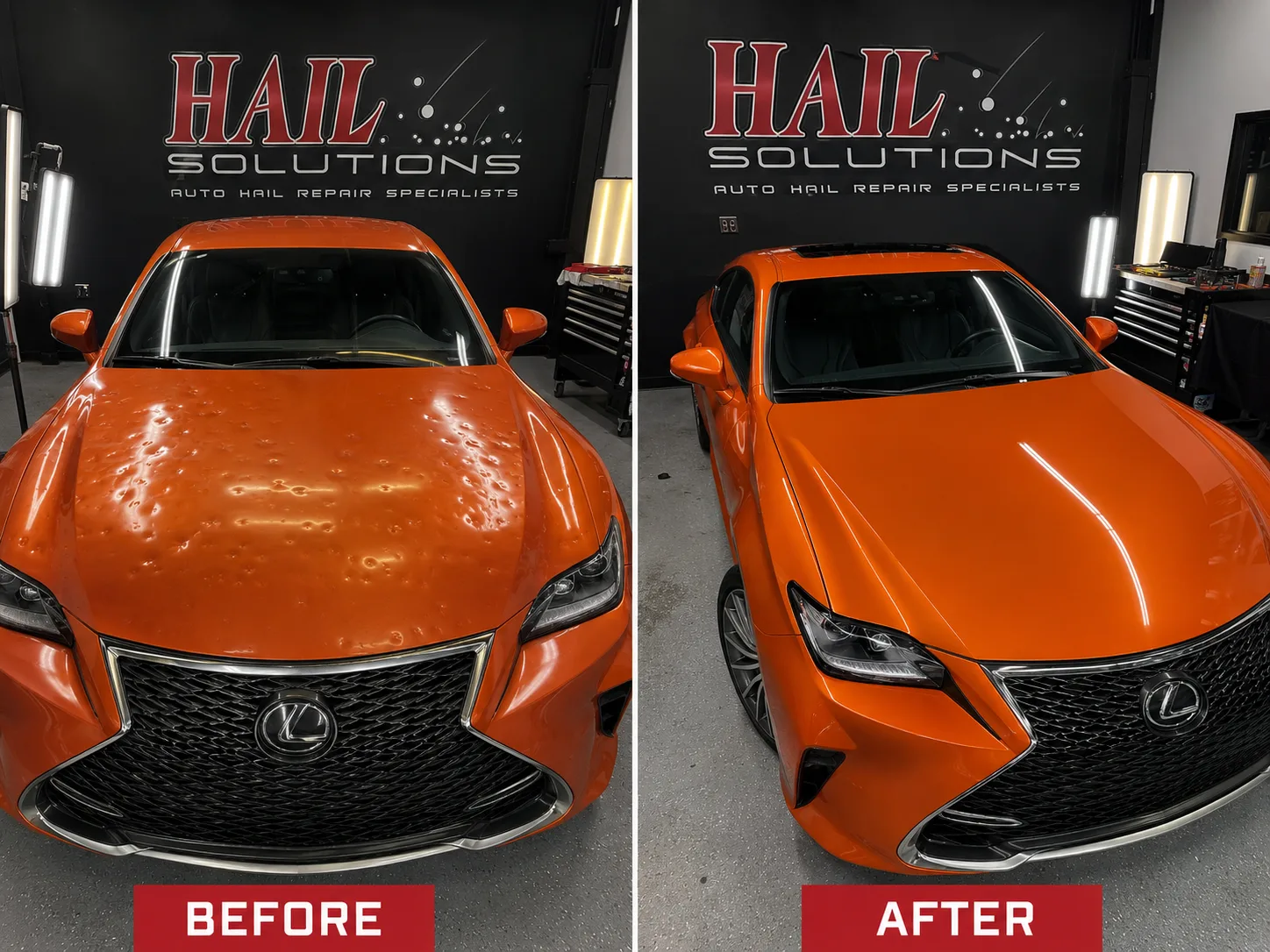
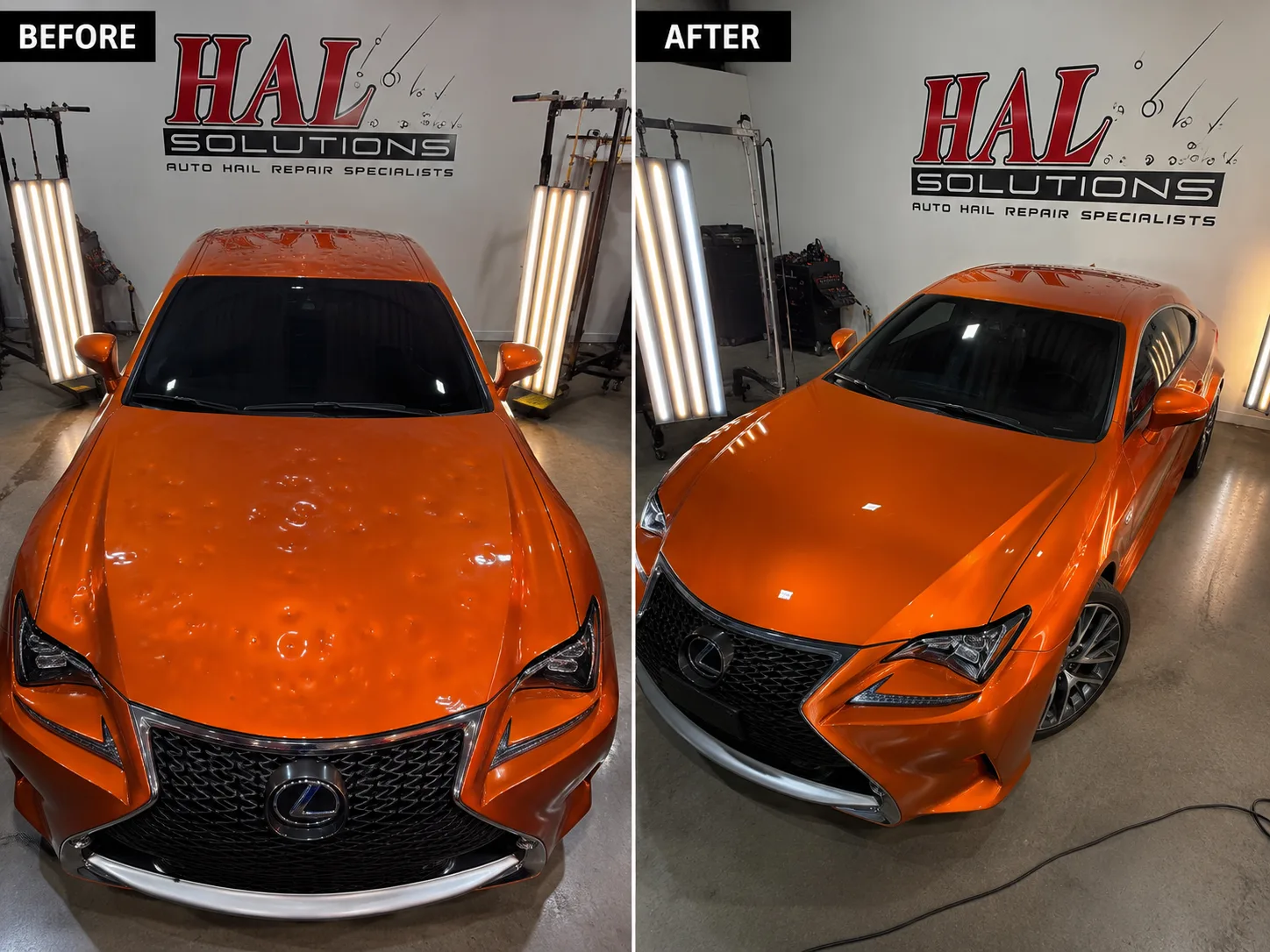
Orange Lexus RC F with hail dents across the hood and roof, before and after paintless dent repair for a Topeka, KS driver
23 Years Of Experience5,000+ Vehicles RestoredFactory Paint PreservedFree Pickup And Delivery In TopekaLifetime Warranty 23 Years Of Experience5,000+ Vehicles RestoredFactory Paint PreservedFree Pickup And Delivery In TopekaLifetime Warranty

If you have hail damage in Topeka, do this first

Most hail damage looks worse than it is. A hood full of dents can read like a totaled car, but it’s almost always cosmetic, and most comprehensive policies cover the repair. Because hail rarely breaks the paint, paintless dent repair brings each panel back to its factory shape without fillers or a respray — so you keep your original finish and a clean CARFAX. We’ve done that for more than 5,000 vehicles from our Olathe shop, and it starts with three things you can do right now.

1

Photograph every panel

Shoot the hood, roof, trunk, and both sides. If the light is flat, hold your phone flashlight low across each panel — the shadows make even shallow dents show. These photos are your record if the first estimate comes back light.

2

Don’t assume a body shop

Paintless dent repair works the metal from behind and keeps your original factory paint — no filler, no repaint, no CARFAX repaint entry. For most hail, it’s the right call, and it’s the only work we do.

3

Get the full picture before you call

We’re in Olathe and we come to you across Topeka. Bring us the photos and we’ll walk the deductible math, tell you honestly whether filing is even worth it, and hand you the script for your carrier. You file the claim — we do the repair.

Read the full guide: what to do after hail
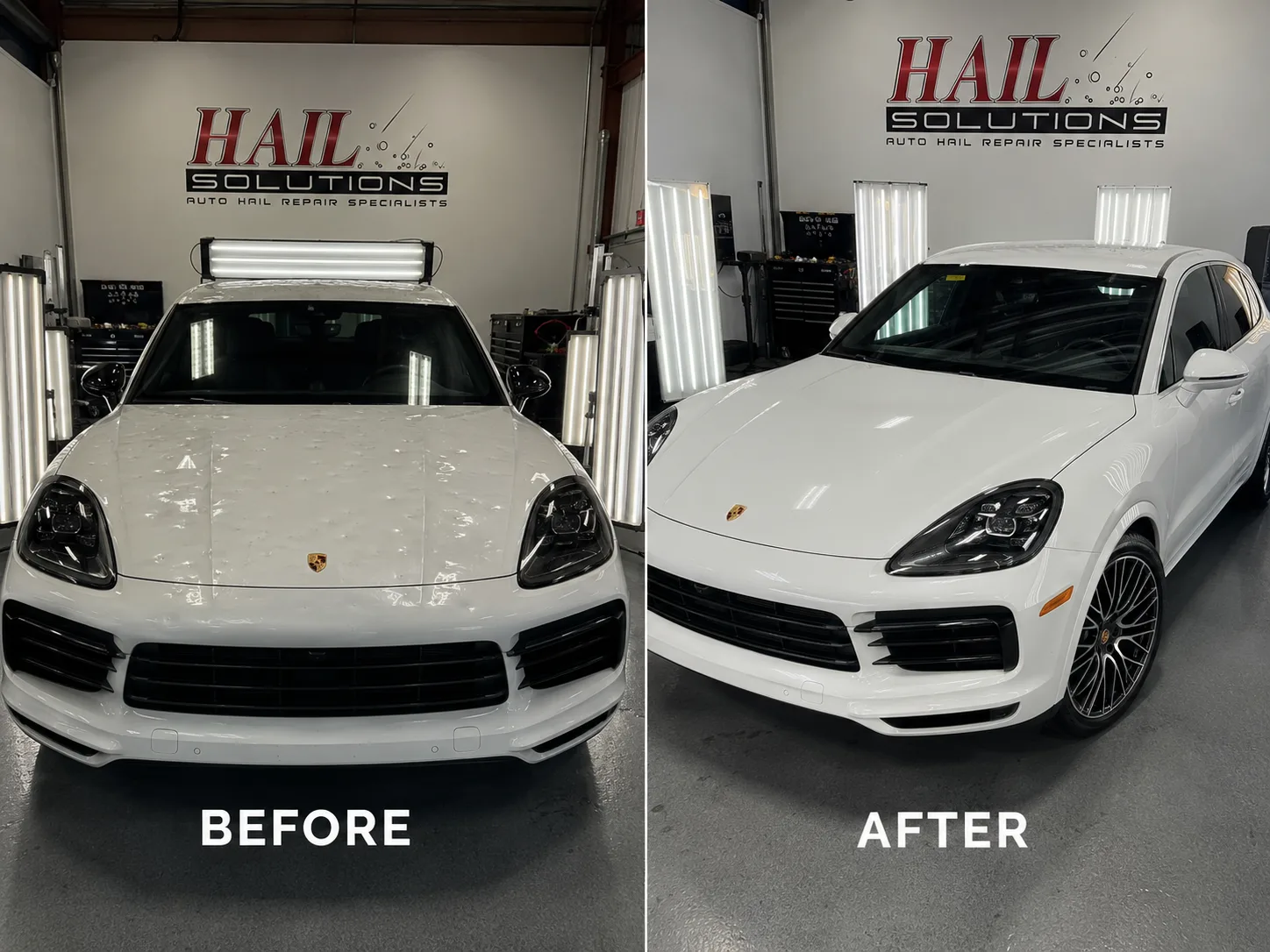
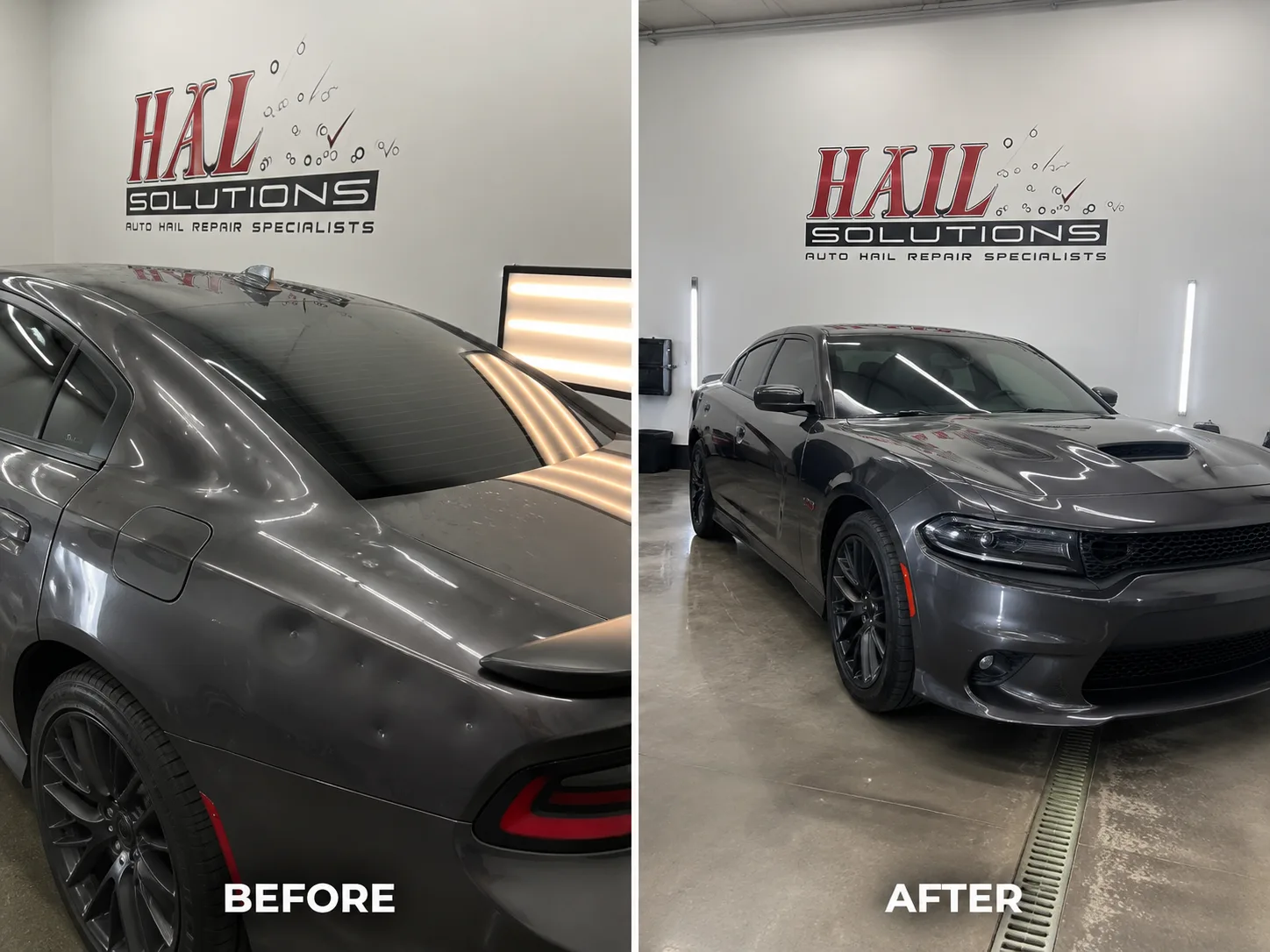
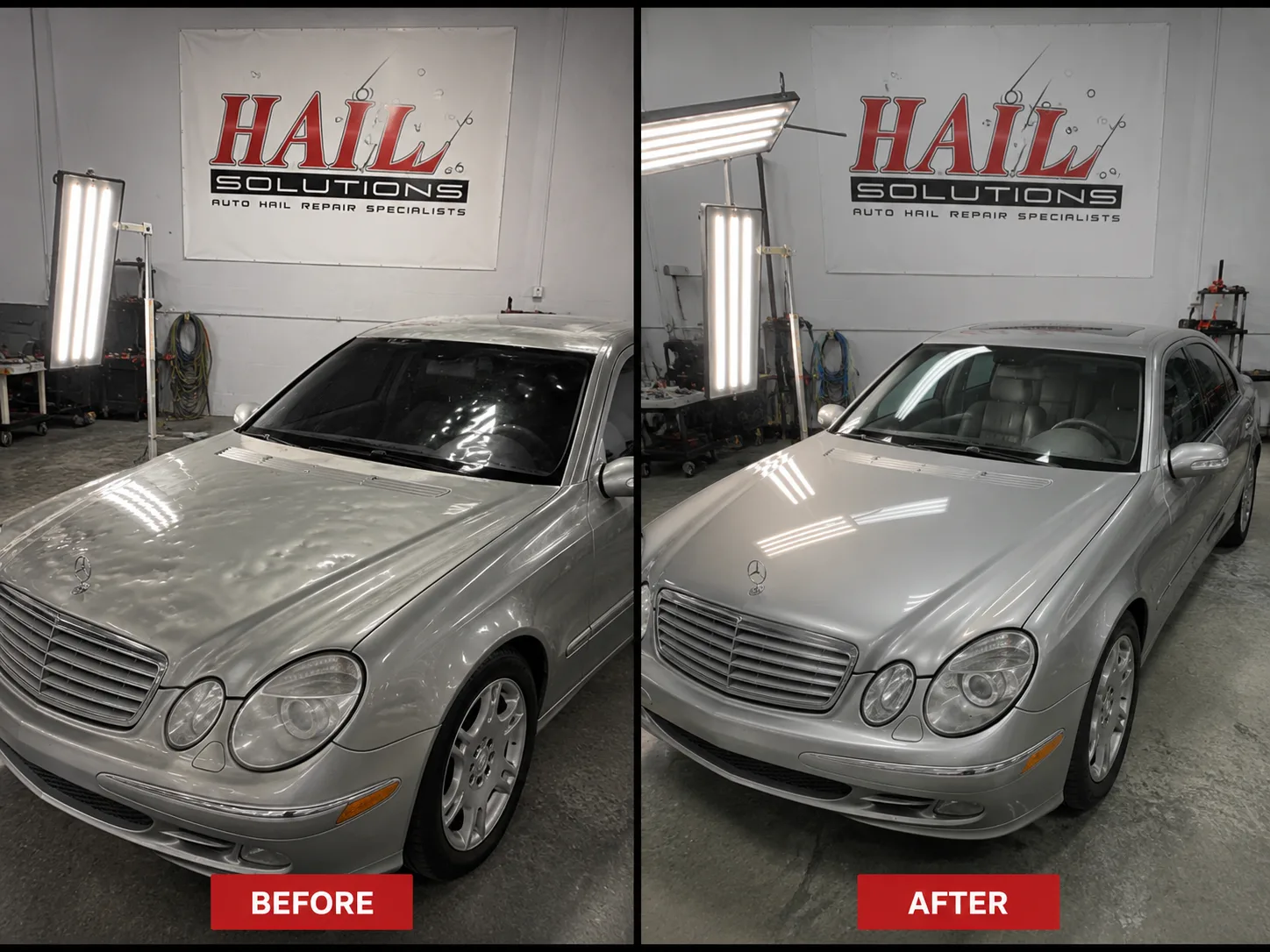
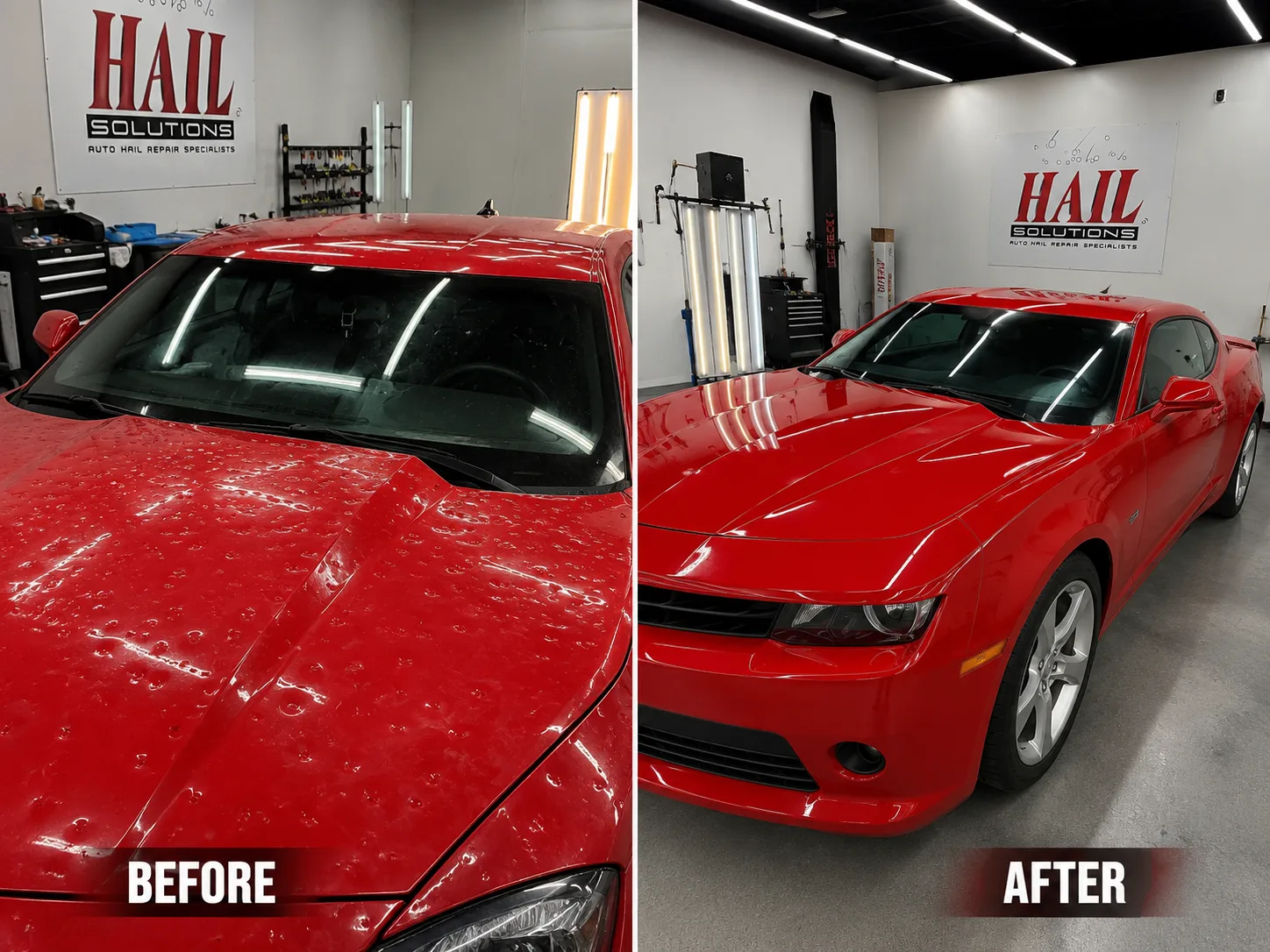
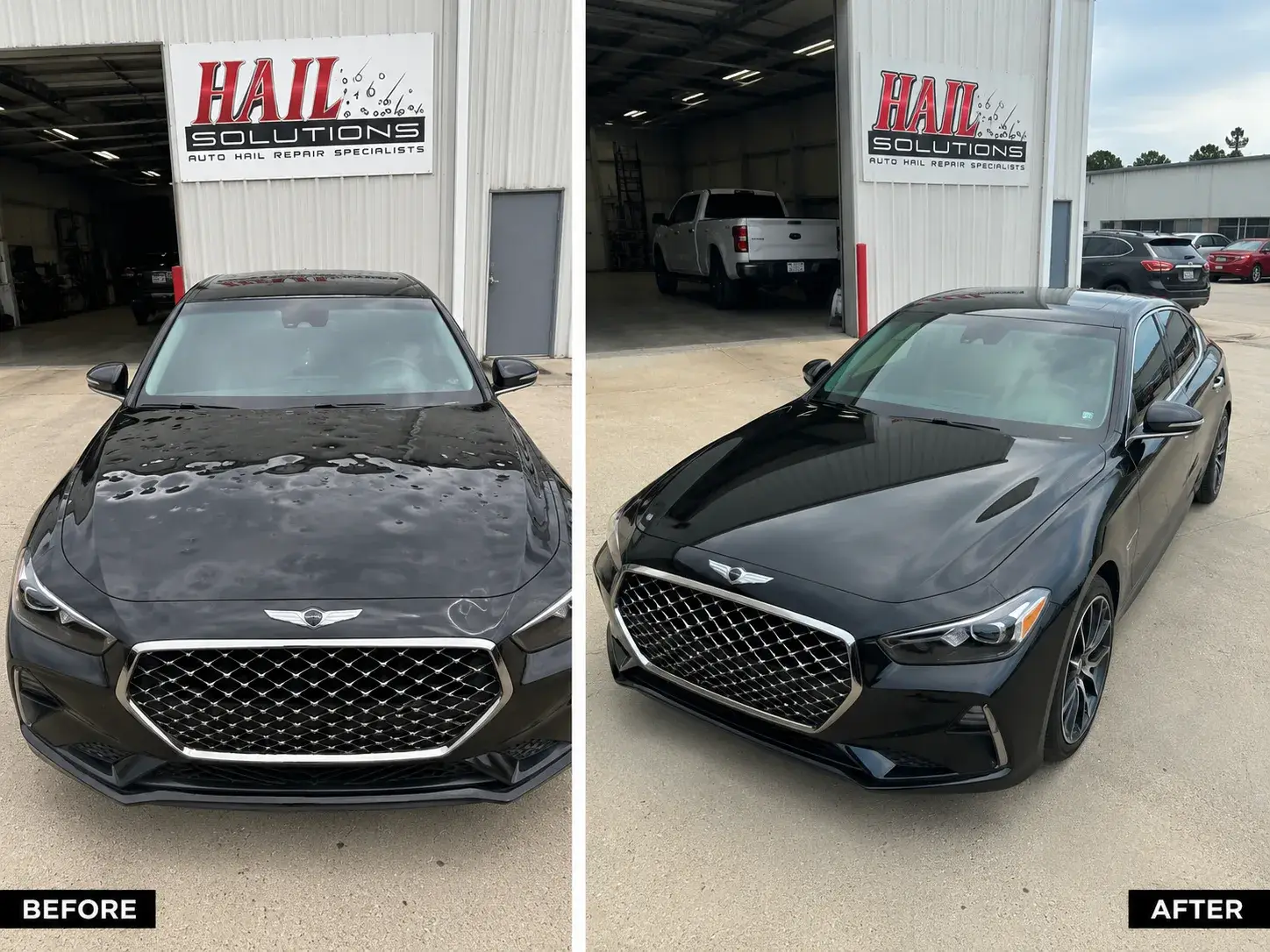
Before and after of paintless dent repair at the Hail Solutions Olathe shop

Before and after of paintless dent repair at our Olathe shop

Before and after Topeka hail dent repairs

Actual vehicles restored at our Olathe shop — no stock photos. More in our repair results and shop gallery.

White Porsche Cayenne with hail damage smoothed out by paintless dent repair, restored at our Olathe shop
Gray Dodge Charger hood pocked with hail dents, before and after paintless dent repair, restored at our Olathe shop
Silver Mercedes E-Class with a hail-dimpled roof, restored at our Olathe shop with paintless dent repair

What hail repair costs in Topeka — and what you’ll actually pay

What you’ll pay comes down to two things: the number of dents and whether your vehicle has aluminum panels. Light hail typically runs $1,500 to $3,500 on steel, moderate lands between $3,500 and $8,000, and severe damage climbs from there — aluminum adds roughly 25% because it takes heat and specialized pulling. With comprehensive coverage you’re responsible for your deductible and the claim covers the rest, which is why filing usually makes sense once you’re past light damage.

Light
50–100 dents · dime to nickel
Steel panels$1,500–$3,500
Aluminum$2,000–$4,500
Usually worth filing
Moderate
100–300 dents · nickel to quarter
Steel panels$3,500–$8,000
Aluminum$4,500–$10,000
File the claim
Severe
300+ dents · quarter and larger
Steel panels$8,000–$15,000
Aluminum$10,000–$18,000
Call before accepting a total-loss offer
Common insurance questions
Will filing a hail claim raise my rates?
Hail is a no-fault comprehensive event, so the filing itself generally doesn’t move your premium the way an at-fault accident would. The specifics depend on your carrier and history, so we’ll walk the math with you first. How comprehensive claims work →
What if the first estimate comes back low?
Desk and photo reviews routinely miss 20–40% of the dents — an adjuster can’t map a roof from a photo the way a technician can under LED lighting. We document every panel in person, submit it in CCC ONE format, and the gap closes on most claims. How supplements work →
Can my insurer make me use one of their shops?
No. Under Kansas rules your insurer can recommend a shop but can’t require one — you choose where the work is done, and the carrier pays the same either way. Your right to choose →
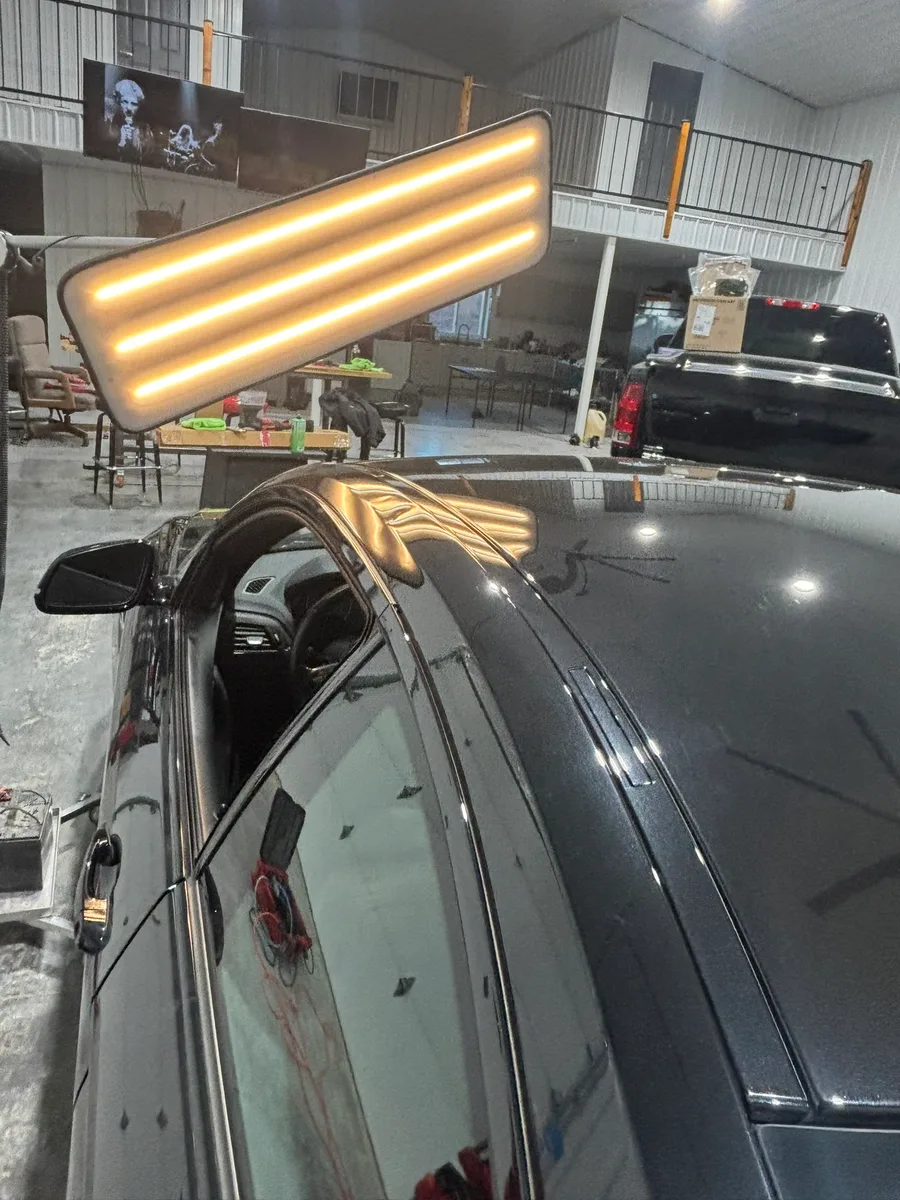
Mapping hail damage under LED line boards at our Olathe shop
Mapping every dent under LED line boards

Should you file a claim? Run the numbers.

Filing isn’t automatic. If the repair is small, it can cost less than it’s worth to involve insurance — and if it’s large, a comprehensive claim is usually the right move. This quick, private check weighs the damage against your own policy; nothing is sent anywhere and no one calls you.

Interactive · No signup required

Should I file a hail damage claim?

Answer two questions. We'll give you a straight recommendation with a repair estimate range — no email, no phone number, no strings.

1. How bad is the damage?
2. What's your comprehensive deductible?$500
$0$100$250$500$1k$2k
Recommended: File

Yes — this is exactly what comprehensive insurance is for.

Estimated repair: $3,500–$8,000. After your $500 deductible, you're looking at $3,000–$7,500 the insurer covers. Hail claims typically don't raise rates.

This tool is an estimate, not legal or insurance advice. Repair costs vary by vehicle, damage pattern, and carrier. Your insurer has the final say on claim specifics.

Which insurance carrier are you dealing with?

State Farm is the #1 auto insurer in Kansas, and GEICO runs its regional claims center down in Lenexa — so most Topeka drivers are working with a carrier we deal with every week, which means we already know how each one wants a hail claim documented.

Choose your insurance carrier to start the walkthrough.

Select your carrier below. If you don’t see yours, choose “And More” and continue with the same guided setup.

Start the Walkthrough

How the repair works, step by step

You stay in control of the claim, and we carry the repair. You make the call to your insurer — it’s your claim — and from there most of the work lands on us, from the LED inspection to the pickup to the final walkthrough. Here’s how the seven steps go.

1

Document the damage

Photograph every panel in good light. This is the record that protects you if the first estimate runs light.

2

We inspect it free in Topeka

At your place or our shop. We map every dent under LED line boards and write it up in CCC ONE format.

3

You file your claim

You open it with your carrier — it’s yours. We hand you the exact script for your insurer. We never file for you.

4

We document the full scope

Every panel, in the format adjusters expect, so the approved amount reflects the real work — not a photo guess.

5

We pick up your vehicle

Free across the metro. Driveway, office lot, dealer lot — wherever the car is, we come to it.

6

We do the repair

Bryan and the team work every panel by hand. Factory paint preserved, no filler, no repaint.

7

We deliver it back

Cleaned, inspected, and looking like the storm never happened — with a lifetime warranty in writing.

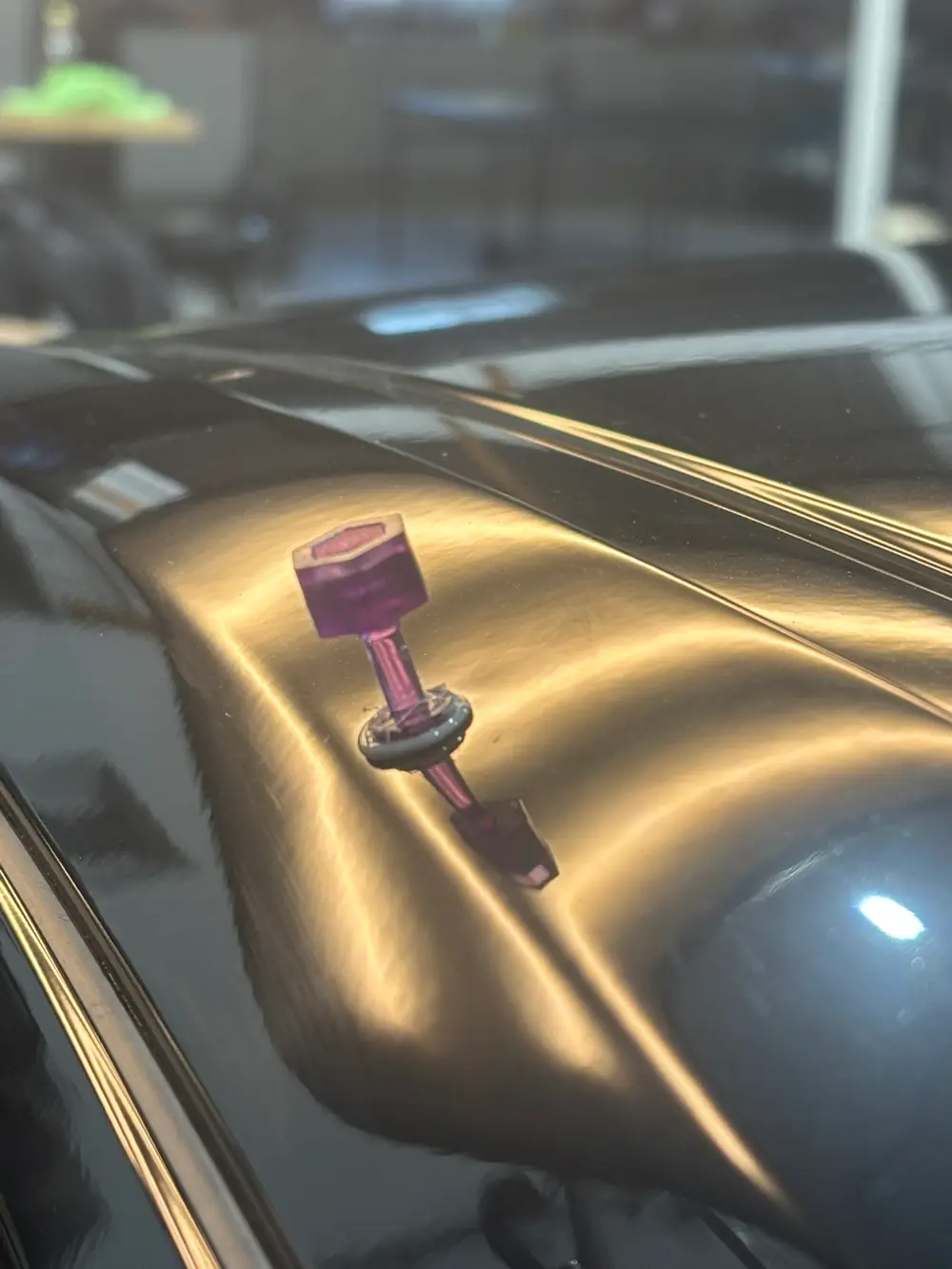
Paintless dent repair in progress on a hail-damaged panel at the Olathe shop
Paintless dent repair in progress at our Olathe shop
Start here

Storm hit your car in Topeka? Let’s make this easy.

Take a few photos, run through the free walkthrough, and pass along the claim number once your insurer gives you one. From there it’s simple: we drive out to Topeka, pick the car up wherever it sits, do the paintless dent repair, and bring it back looking like the storm skipped it.

Start the walkthrough

Kansas hail-claim law, in plain English

The part most shops never explain — and the law is more on your side than you’d think.

What hail damage looks like, level by level

Most hail damage falls into one of three levels, and which one you’re looking at drives both the repair time and whether filing a claim makes sense. Here’s how to tell them apart.

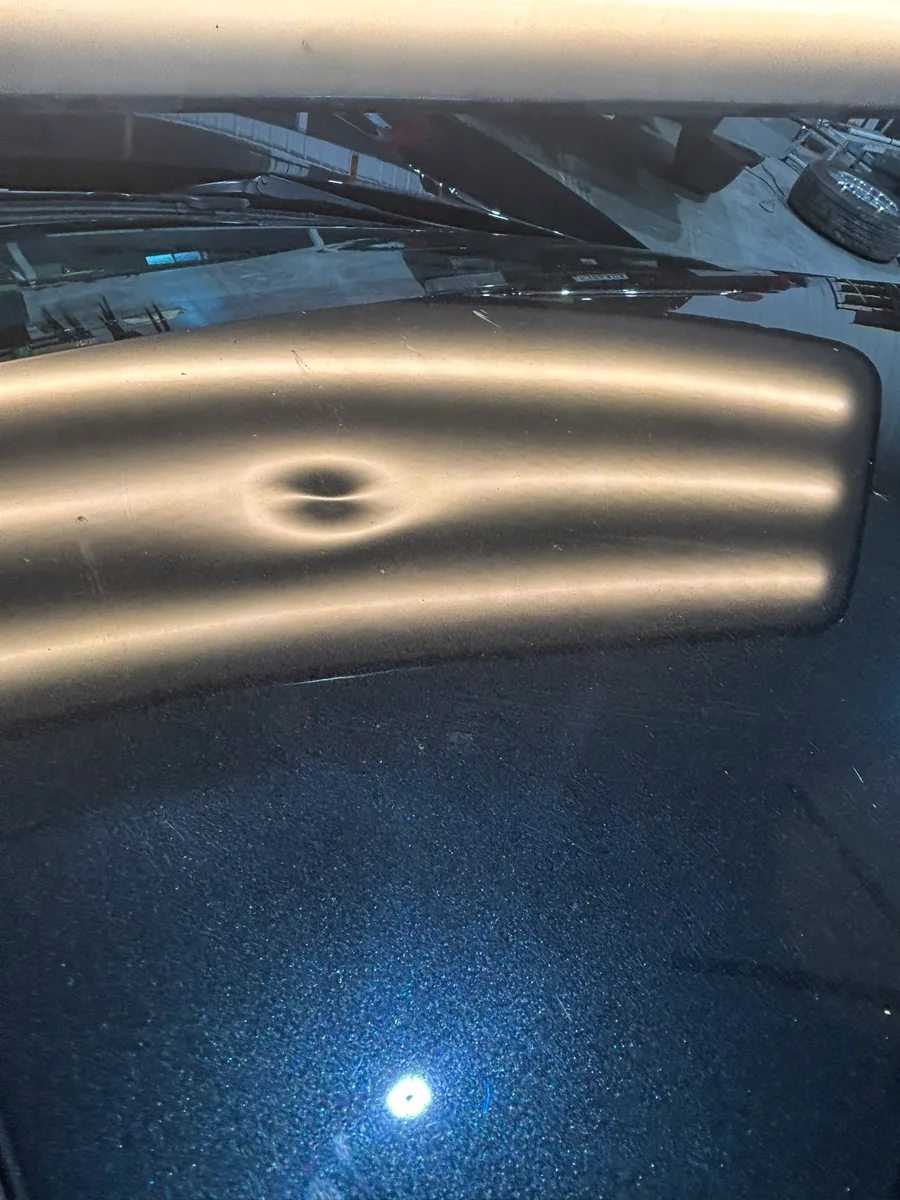
Light hail dents on a vehicle panel, revealed under raking LED light in Olathe, KS
Light
50–100 dents · dime to nickel

The most common outcome, and almost always cosmetic — your car is safe to drive. Easy to miss in flat light, easy to see at a low angle.

Usually worth filing
A hail dent on a vehicle hood under LED line-board inspection in Olathe, KS
Moderate
100–300 dents · nickel to quarter

Clearly visible without special lighting. Shows worst on broad flat panels — hoods, roofs, tailgates — which is where the dent counts climb fast.

File the claim
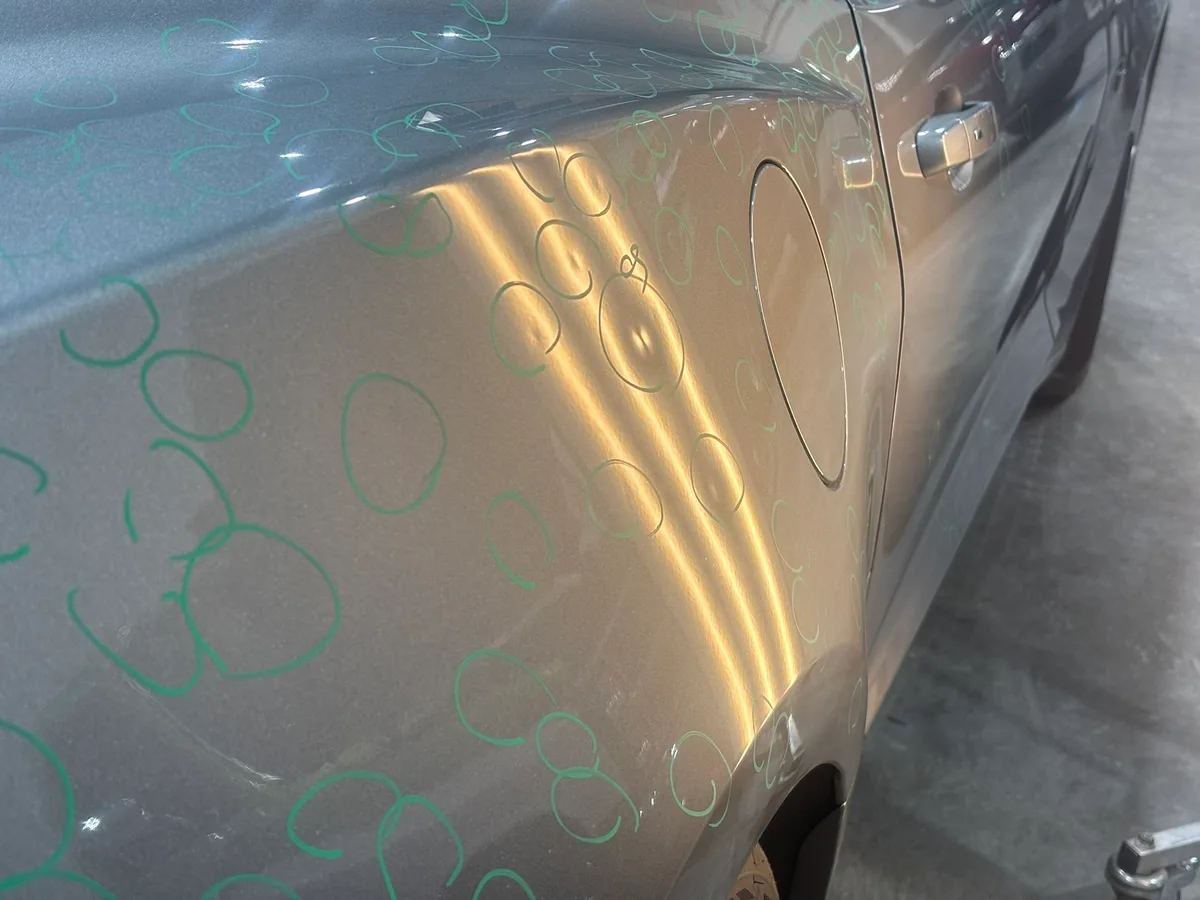
Dense hail dents marked across a vehicle quarter panel before paintless dent repair in Olathe, KS
Severe
300+ dents · quarter and larger

Panels visibly deformed. On older vehicles, a low value plus an inflated estimate can approach Kansas’s total-loss line — but many of these are saveable.

Call before accepting a total-loss offer

How much hail does Topeka get?

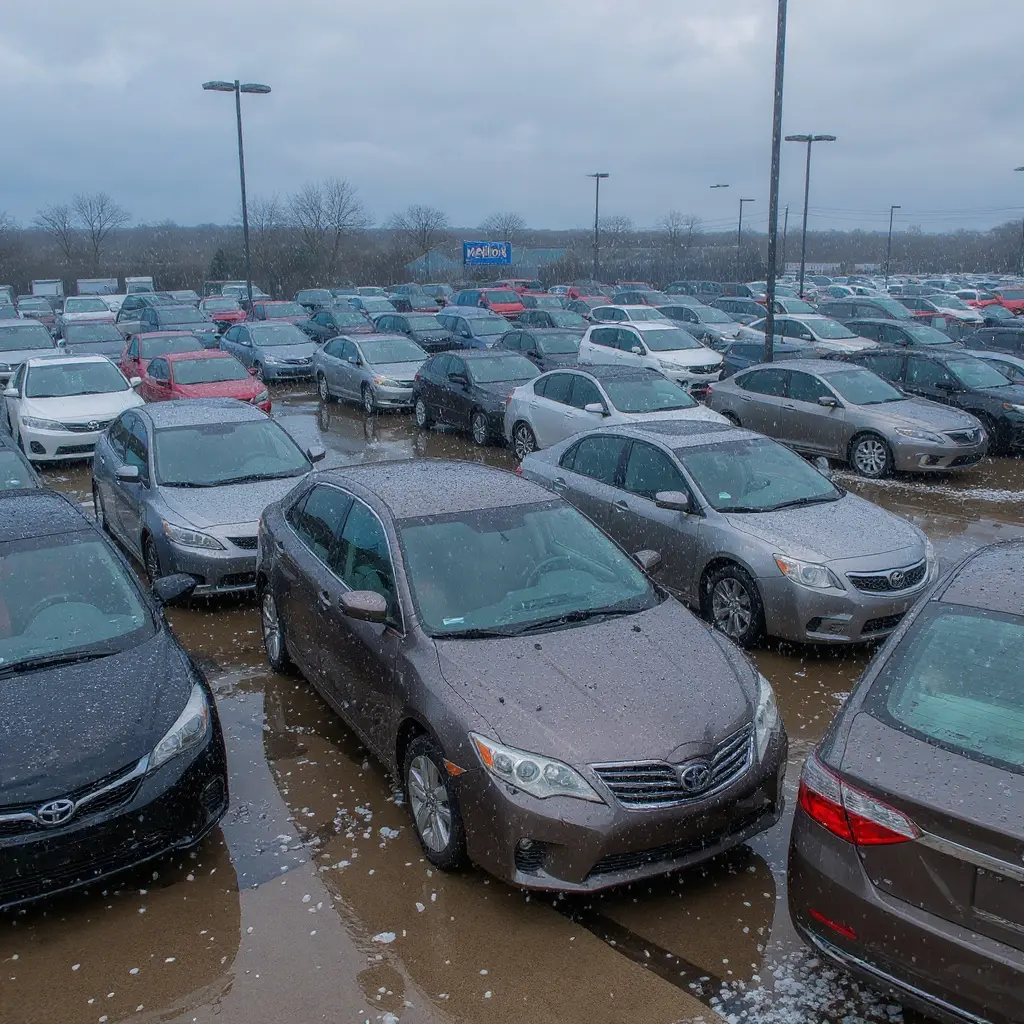
Spring storms reach the capital region most years, and the statewide loss figures show what that adds up to across Kansas.

Hail-dented quarter panel marked for paintless dent repair at the Hail Solutions Olathe shop

How much hail does the Kansas City metro get?

Enough that most drivers here deal with it eventually. The metro’s hail season runs roughly March through June, storms can move through from any direction, and a single spring can bring stones big enough to dent a hood or roof. The good news is that most of it is cosmetic — exactly what paintless dent repair is built to undo.

In 2025, Kansas insurers paid about $879 million across roughly 82,500 storm claims statewide.

About 1.86 million vehicles are registered across the eight-county Kansas City metro.

Kansas City’s hail season runs roughly March through June, and no storm follows a fixed path — any given storm can move through from any direction. Most damage is cosmetic dents in sheet metal, not broken glass or panels.

Where do Topeka cars actually get hit?

In a capital city, most of the damage happens while people are at work or out for the afternoon — the car parked all day downtown, or the one left in a lot during an errand or a ballgame.

The eight-hour parking spot near the Capitol

Government and healthcare keep this city running, and that means thousands of cars sit in open lots and on the streets around the Kansas State Capitol from morning to evening. Hail tends to fire up on warm afternoons — right in the middle of a day shift. A vehicle parked downtown has nothing over it when a cell moves through, and the older commuter takes the same beating as the new one beside it.

Campus lots and a full afternoon at Gage Park

Washburn University fills its surface lots with student and staff cars on a class-day schedule, and a draw like Gage Park keeps spaces packed whenever the weather turns nice. Either one puts a lot of uncovered metal in a small footprint, so a single storm over central Topeka can dent dozens of cars in one pass.

The shop behind the repair

A permanent local business — not a tent that follows the storms.

Bryan Wilson has been straightening hail-dented metal since 2002. More than 5,000 vehicles later, he still trains every technician who works under the Hail Solutions name and personally handles the hard jobs — aluminum panels and severe, hundreds-of-dents cars that need judgment, not just hours. That experience is the difference between a panel that looks repaired and one that looks like the storm never happened.

We’re a fixed address, and that matters more than it sounds. After a big storm, out-of-state crews set up in parking lots, take the easy claims, and are gone before any warranty question comes up. Hail Solutions is here year-round at 2109 E Kansas City Rd in Olathe — you can find us in February, not just after a June hailstorm. Every repair is backed by a lifetime warranty in writing, which only means something if the shop is still standing to honor it.

That permanence is also why insurers and customers across Shawnee County keep sending cars our way: the documentation is clean, the work holds up, and there’s a real building and a real name behind it.

23 yrsOf paintless dent repair experience, since 2002
5,000+Vehicles restored
LifetimeWarranty, in writing, on every repair
Hail Solutions, serving Topeka

Our shop sits about 55 miles east in Olathe, and that distance is on us — we make the drive both ways, so the car never leaves your hands except to get fixed. After a big storm, traveling crews set up in Topeka lots for a week or two and roll out before anyone can come back with a warranty question. We don’t work that way. There’s one permanent Olathe address behind every repair, and the lifetime warranty comes in writing — which matters most on the everyday car you plan to keep driving for years.

Hail Solutions

Find us on Google →

2109 E Kansas City Rd, #22
Olathe, KS 66061
Mon–Fri 8:00 AM - 6:00 PM
Sat 9:00 AM - 4:00 PM
Sun Closed

Topeka hail repair questions

My car is older — is a hail claim even worth filing?

Often, yes, and it’s worth doing the math before you decide. The repair is set against your deductible: light hail usually runs $1,500 to $3,500, moderate work $3,500 to $8,000, and severe damage past $8,000, with aluminum panels adding about a quarter to the total. Even a modest hail hit frequently clears a typical deductible by a wide margin, and since comprehensive coverage carries no fault, filing on an older daily driver tends to make sense. The free walkthrough lays the numbers out so you can see it for yourself.

Do you pick up in Topeka, or do I drive to Olathe?

No drive required — we come to you. It’s about 55 miles from our Olathe shop, and there’s no charge to collect the car and bring it back, whether it’s in your driveway, on a street near the Capitol, or in a campus lot at Washburn.

Will filing a claim raise my rates?

Hail sits under comprehensive coverage and carries no fault, so the act of filing usually won’t raise your premium the way an at-fault crash can. The exact effect comes down to your carrier and claim history — ask your agent to confirm.

My car is older — could my insurer total it?

It can. Kansas treats a car as totaled once repairs reach 75% of its value, and a low value alongside a padded first estimate can cross that line. Backing the claim with accurate paintless dent repair pricing usually brings the figure back under it.

How long does the repair take?

Figure one to three days in the shop for most cars, up to a week or so for severe damage. After we inspect it we give you a realistic timeline and keep the job moving while it’s with us.

Other Kansas cities we serve

Same shop, same lifetime warranty, a short drive away.

Call Today! Use the Claim Wizard